Kitchens are no longer polite, show-home spaces reserved for special occasions. They’re where muddy shoes land after dog walks, where coffee gets knocked over mid-morning, and where chairs scrape back and forth several times a day. Expecting a kitchen floor to stay pristine simply isn’t realistic, and thankfully, design thinking is catching up.
Today’s best kitchen floors are designed to hide life, not fight it. From forgiving textures to clever colour choices, the focus has shifted towards surfaces that look better lived-in.
What “Life-Proof” Kitchen Flooring Really Means
Life-proof doesn’t mean indestructible. It means choosing a floor that works with everyday mess rather than highlighting it.
The most forgiving kitchen floors tend to share a few key traits:
- Natural variation that disguises marks and scuffs
- Mid-tone colours that don’t show every crumb or footprint
- Textured or matt finishes that reduce glare and wear visibility
- Durable construction suited to moisture and temperature changes
Smooth, glossy, uniform floors may look stunning on day one, but they often show scratches, splashes and dust almost immediately, especially in kitchens with outdoor access.
Why Lived-In Kitchens Are Trending
There’s a noticeable shift away from showroom-perfect interiors. Social media trends, lifestyle content and design commentary increasingly celebrate homes that look used, layered and personal.
In kitchens, this has led to:
- Less emphasis on high-gloss finishes
- More interest in rustic, heritage and natural materials
- A growing preference for flooring that ages gracefully
Psychologically, spaces that feel relaxed and resilient are easier to live with. A kitchen floor that can take muddy boots without panic allows the room to function as intended, as the heart of the home, not a museum.
Engineered Wood Flooring
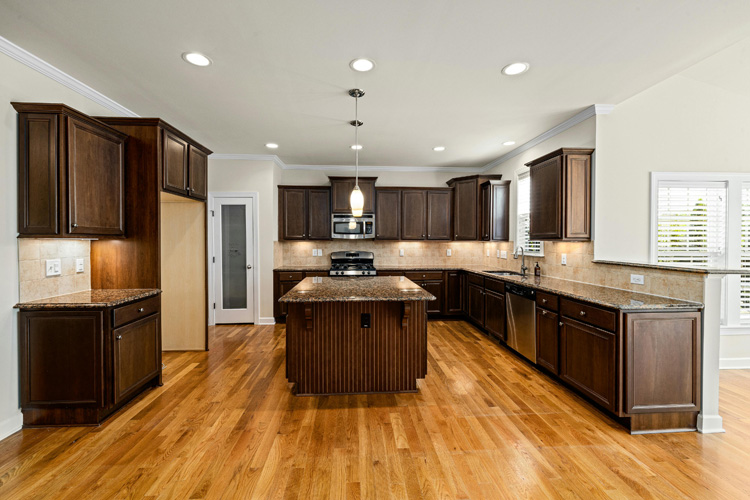
Engineered wood might seem risky in a kitchen, but character-grade boards with knots, grain variation and a matt finish are surprisingly forgiving.
Why it works:
- Natural markings camouflage scratches
- Brushed or textured finishes reduce wear visibility
- Small dents and marks blend into the grain over time
Mid-tone oaks and slightly rustic styles perform far better than ultra-smooth, pale planks. Spills still need wiping up promptly, but everyday scuffs feel less dramatic.
Luxury Vinyl Tile (LVT)
LVT is one of the most practical choices for busy kitchens. Designed to handle moisture, dirt and foot traffic, it’s particularly well-suited to households with pets, children or frequent visitors.
Why it works:
- Waterproof construction handles spills with ease
- Textured wood or stone designs disguise dirt
- Durable wear layers resist scratching from chairs and boots
Stone-effect LVT and wood designs with variation tend to hide mess better than ultra-uniform patterns. It’s a practical foundation that doesn’t look overly clinical.
Parquet & Patterned Floors
Parquet floors, whether wood or LVT, are excellent at hiding daily wear thanks to their broken-up patterns.
Why it works:
- Directional layouts distract from marks
- Movement in the pattern hides dust and scratches
- Adds visual interest without relying on colour alone
Herringbone and chevron designs work particularly well in kitchens that open onto gardens or hallways, where dirt is more likely to travel inside.
Colours & Finishes That Are More Forgiving
Floor colour plays a bigger role than many expect.
The most practical kitchen floor shades tend to be:
- Warm mid-tones (honey oak, soft browns, greige)
- Slightly earthy or neutral blends
- Designs with tonal variation rather than flat colour
Very dark floors can show dust and footprints, while very pale floors highlight every spill. Matt or oiled finishes are generally more forgiving than high-sheen surfaces, which reflect light and exaggerate imperfections.
Is a “Mess-Hiding” Floor Right for Every Kitchen?
A forgiving floor is ideal for most households, but priorities still matter.
It’s particularly worthwhile if:
- The kitchen opens directly to the outdoors
- Pets or children regularly use the space
- The kitchen doubles as a dining or social area
- Low maintenance is a key goal
For rarely used or purely decorative kitchens, appearance may take priority over durability. For everyday homes, choosing a floor that hides life often leads to greater long-term satisfaction.
Flooring as the Foundation of a Real Home
Kitchen floors take more abuse than almost any other surface in the home. Choosing one that embraces wear rather than exposing it changes how the space feels day to day.
A floor that hides spills, scratches and muddy boots doesn’t lower design standards; it raises them. It allows kitchens to feel warm, usable and lived-in, supporting real routines rather than fighting them.
When flooring is chosen with everyday life in mind, the kitchen becomes less about perfection and more about comfort, confidence and ease; exactly what a modern home needs.