Every December, my kitchen slowly turns into a planning zone — notes on the phone, grocery lists scribbled on paper, and that familiar question playing in my head: “Ano kaya ang lulutuin this Christmas?”
This year, that question came with a lot more noise after the Department of Trade and Industry (DTI) said that ₱500 is enough for a basic Noche Buena for a family of four.
As someone who cooks for a living, writes about food, and feeds a family daily, I wanted to look at this not with anger—but with honesty, softness, and a little bit of real‑world kitchen experience.
So let’s talk about it. Not as economists. Not as politicians. But as people who actually stand in front of the stove on Christmas Eve.
What the DTI Was Trying to Say
To be fair, the DTI was referring to a very basic Noche Buena — simple dishes, small portions, and prices based on suggested retail prices (SRP).
From a technical standpoint, yes, it can work.
But food—especially Christmas food—isn’t just about numbers. It’s about tradition, comfort, and that quiet joy of seeing everyone gathered around the table at midnight.
That’s where many Filipinos felt the statement missed the mark.
From the Kitchen: Why ₱500 Feels Different in Real Life
On paper, ₱500 looks manageable.
In the kitchen, it feels very different.
Because once you cook regularly, you know that costs aren’t just about the main dish. There’s also:
- Cooking oil
- Seasonings and spices
- Gas or electricity
- Condiments
- That “konting dagdag” because you don’t want anyone bitin
And if you’re a mom, you’re not cooking for exactly four people. You’re cooking for:
- Kids who suddenly eat more during holidays
- A spouse who says “konti lang” but gets seconds
- Relatives who drop by after midnight
Suddenly, ₱500 feels… tight. Really tight.
Sample Noche Buena Menus: What ₱500 vs ₱1,500 Looks Like
Let’s make this concrete.
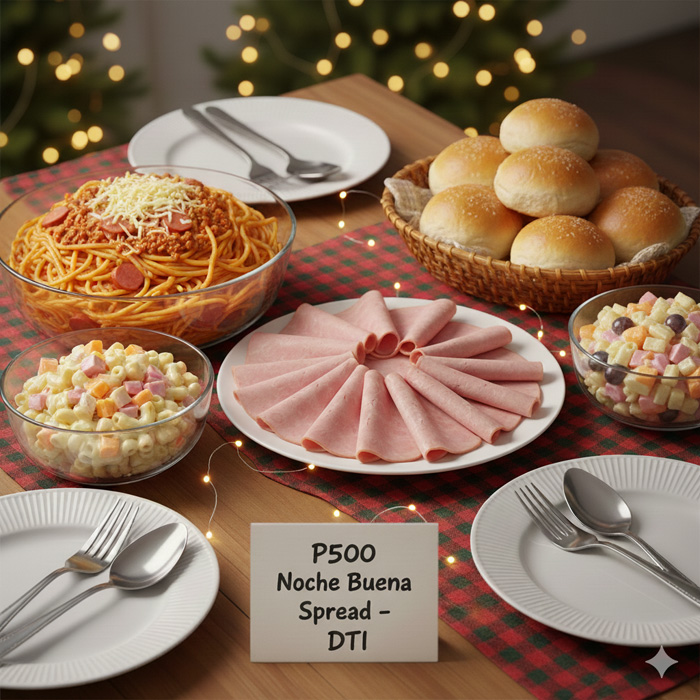
A Very Simple ₱500 Noche Buena (Possible, but Limited)
- Spaghetti (small pack of pasta + basic sauce)
- A small portion of sliced ham or hotdogs
- One loaf of bread
- A simple juice or powdered drink
This works if:
- Portions are controlled
- No leftovers are expected
- Prices are close to SRP
- Expectations are kept very simple
It’s food on the table — and that already matters.
A More Relaxed ₱1,500 Noche Buena (More Realistic for Many)
- Spaghetti with better sauce and cheese — one with ground beef
- Chicken dish (fried or simple roast)
- Lumpiang shanghai or macaroni salad
- Bread or rice
- Dessert (fruit salad or leche flan)
With ₱1,500, there’s breathing room. You’re not watching every ladle. You can enjoy the meal instead of worrying if it’s enough.
Why the Statement Hurt for Many Families
The reaction wasn’t really about the ₱500 figure.
It was about how it felt.
For families already stretching every peso, the statement sounded like: “Kung kaya ‘yan, bakit ikaw hindi?”
And no one wants Christmas to feel like a test of budgeting skills.
Food, especially during holidays, carries emotion. It carries dignity. And when people feel unseen in that reality, they react.
A Softer, More Honest Truth
Here’s my food blogger mom take:
✔️ ₱500 can work for a very simple Noche Buena. Kasi if that’s what you only have — you can make it work.
✔️ ₱1,500 – ₱2,500 is closer to what many Filipino families actually need.
✔️ Neither makes you a better or worse parent.
The real danger isn’t spending more than ₱500. It’s making moms feel guilty for wanting to serve something special once a year.
What Really Makes Noche Buena Special
After years of cooking and blogging about food, I’ve learned this:
- One heartfelt dish beats five stressful ones
- Shared food tastes better than perfect food
- Kids remember the feeling, not the price
You don’t need a grand spread. You need delicious and enough plus warmth, intention, and love in the cooking.
If ₱500 is what you have this year, make the best dish you can and serve it with pride.
If you go over that budget, that doesn’t mean you failed. It just means you’re human — and you wanted to make Christmas feel special.
Noche Buena isn’t about proving a point. It’s about gathering, gratitude, and grace.
From one mom and food lover to another: whatever ends up on your table, that is already enough.