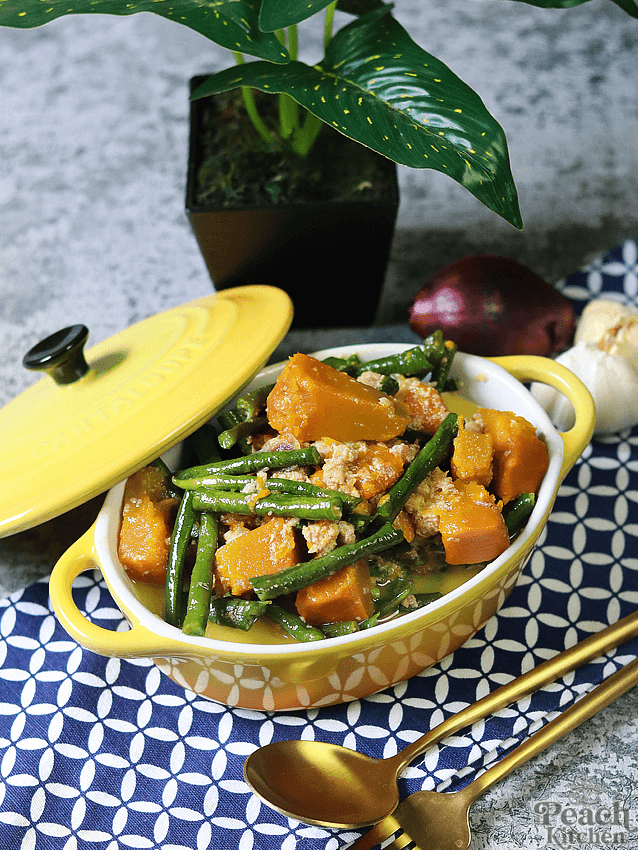
Creamy, comforting, and deeply familiar, this ginataang sitaw at kalabasa is a simple Filipino vegetable dish cooked in coconut milk that turns everyday ingredients into a warm, satisfying ulam the whole family will love. 💛
A Comforting Filipino Ulam That Feels Like Home
There are days when I don’t want anything fancy—no complicated ingredients, no long prep time, and definitely no multiple pans to wash. I just want something warm, comforting, and familiar. And on days like that, ginataang sitaw at kalabasa always comes to mind.
This dish reminds me so much of home. The smell of coconut milk simmering on the stove, mixed with garlic, onions, and a little bagoong—it’s the kind of aroma that instantly makes you hungry and somehow makes the house feel calmer. Growing up, this was one of those ulam na parang laging andiyan. Simple, affordable, and nourishing.
Now that I’m the one cooking for my own family, I understand why this dish was always on rotation. It’s practical, filling, and you can stretch it to feed everyone without hurting the budget. Plus, it’s a great way to sneak vegetables into meals—especially for kids who are not exactly gulay fans.
Why I Love Making Ginataang Sitaw at Kalabasa
What I love most about this recipe is how forgiving and flexible it is. Walang pressure. You don’t need exact measurements, and you can easily adjust it based on what’s in your fridge.
Some days, I add more kalabasa because I love how it melts into the sauce and makes everything creamier. On other days, I add more sitaw for extra crunch. Using ground pork makes it quicker to cook and easier to mix into the sauce, which my kids actually prefer over chunky meat.
And let’s be honest—anything cooked in gata automatically feels special, even if the ingredients are basic. It’s one of those dishes that tastes like you put in a lot of effort, even when you didn’t.
Mommy Tips from My Kitchen
- If you want a thicker, richer sauce, use coconut cream instead of coconut milk — or simmer uncovered for a few extra minutes.
- For a little heat, add siling labuyo or chili flakes.
- You can swap ground pork with shrimp, sliced pork belly, or even tofu for a meatless version.
- This dish tastes even better the next day, so don’t be afraid to cook extra.
Why This Dish Always Works for Family Meals
Ginataang sitaw at kalabasa is one of those dishes that checks all the boxes: budget-friendly, nutritious, easy to cook, and deeply satisfying. It’s perfect for busy weekdays, meatless Mondays (with a small tweak), or days when you just want comfort food that doesn’t feel heavy.
Every time I serve this, it reminds me that good food doesn’t have to be complicated. Sometimes, the simplest dishes are the ones that stay with us the longest—passed down, recreated, and loved in our own kitchens.
This is the kind of ulam that feels like a warm hug after a long day. If you grew up eating ginataang gulay, I’m sure this recipe will bring back memories. And if you’re new to it, I hope this becomes one of those dishes you’ll keep coming back to — because some recipes never get old.
PrintGinataang Sitaw at Kalabasa with Ground Pork
Ingredients
- 2 tbsp cooking oil
- 3 cloves garlic, minced
- 1 onion, chopped
- 3 tbsp shrimp paste
- 200g ground pork
- 1 1/2 cups coconut cream/milk
- 3–4 cups squash, cut into pieces
- 3 cups sitaw (1 bunch) cut into 2-inch pieces
- ground black pepper
- 1 tbsp patis (to taste)
Instructions
-
Heat the cooking oil in a wide pan over medium heat.
-
Add the ground pork and cook, breaking it apart with a spoon, until lightly browned and the fat starts to render.
-
Stir in the garlic and onion. Sauté until fragrant and the onions turn soft and translucent.
-
Add the shrimp paste and cook for another minute, allowing the flavors to fully develop.
-
Pour in the coconut milk or cream, then season with ground black pepper. Cover and let it simmer gently for about 10 minutes.
-
Add the squash (kalabasa) and continue cooking until tender but not mushy.
-
Once the squash is tender, add the sitaw and cook for a few more minutes, just until cooked but still slightly crisp.
-
Season with patis to taste. Give it a final stir and adjust the seasoning if needed.
-
Serve hot with steamed rice and enjoy this comforting Filipino classic.